
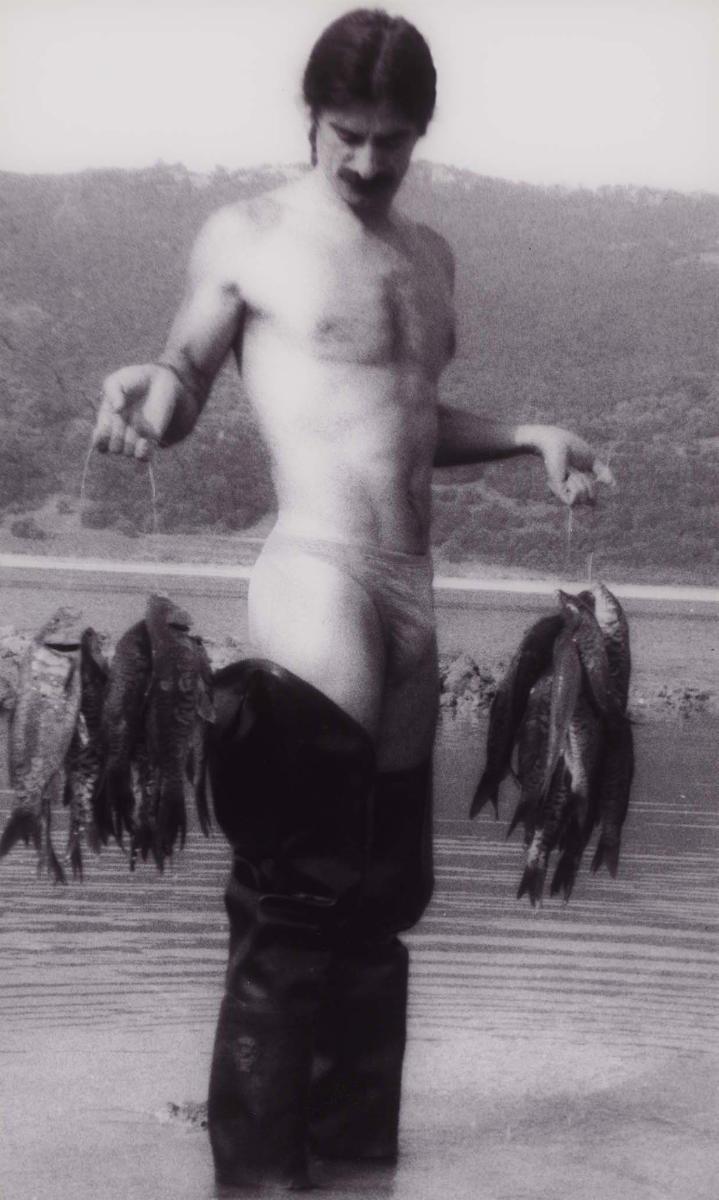
Ψαράς Ι
Πάνος ΧαραλάμπουςΤα έργα του Πάνου Χαραλάμπους «Ψαράς Ι» και «Ψαράς ΙΙ» ανήκουν στην ενότητα «Περί αλιείας/Ιχθύς», μια από τις πρώτες του μεγάλες θεματικές ενότητες εργασίες, η οποία εμπνέεται από το περιβάλλον και τις δραστηριότητες των αλιέων της λίμνης Αμβρακίας και τον πολλαπλό συμβολισμό του ιχθύος. Έχοντας ως εφαλτήριο ένα από τα σπουδαιότερα έργα κυκλαδικής τοιχογραφίας, τον «Ψαρά» από οικία προϊστορικής πόλης στο Ακρωτήρι της Θήρας, αναπαριστά ο ίδιος το μοτίβο του ψαρά. Τοποθετώντας τα δύο έργα το ένα δίπλα στο άλλο, οι δύο ανθρώπινες φιγούρες βρίσκονται η μία αντίκρυ στην άλλη, δημιουργώντας ένα ιδιαίτερο διάλογο με την παράδοση, συνδέοντας το παρόν με το παρελθόν, ενώ ταυτόχρονα η συνύπαρξη αυτή διευρύνει το περιεχόμενο του έργου και τις δυνατότητες επικοινωνίας με τον θεατή.
Panos Charalambous was born in 1956 in Aetolia. He studied painting at the Athens School of Fine Arts (ASFA) in the workshop of Nikos Kessanlis. He is a professor at the Department of Fine Arts of ASFA, director of the 4th Painting Studio and in the period 2014-2019, he was the Dean of the School of Fine Arts.
In his artworks, Charalambous delves into unconventional forms of artistic expression with a strong emphasis on their intellectual or conceptual development. His artwork often has philosophical extensions, aiming to highlight the continuity and timelessness of art.
He has represented Greece at the 58th Venice Biennale in 2019 and has presented his artwork in numerous solo and group exhibitions. He has also participated in international exhibitions, including the Voice-o-graph & Flatus Vocis at Documenta 14 (Athens and Kassel, 2017), Genii Loci: Greek Art from 1930 to Today (St. Petersburg, 2016), White House Biennial (Varna, 2016), Breakthrough at ARCO (Madrid, 2004), Eidos (Besançon, 2004), Copenhagen - Cultural Capital of Europe (1996), Ogrody (Poznań, 1996), Kunst-Europa, Visual European Landscape (Berlin, 1991), Glasgow - Cultural Capital of Europe (1990), and more.


