
La tour Eiffel
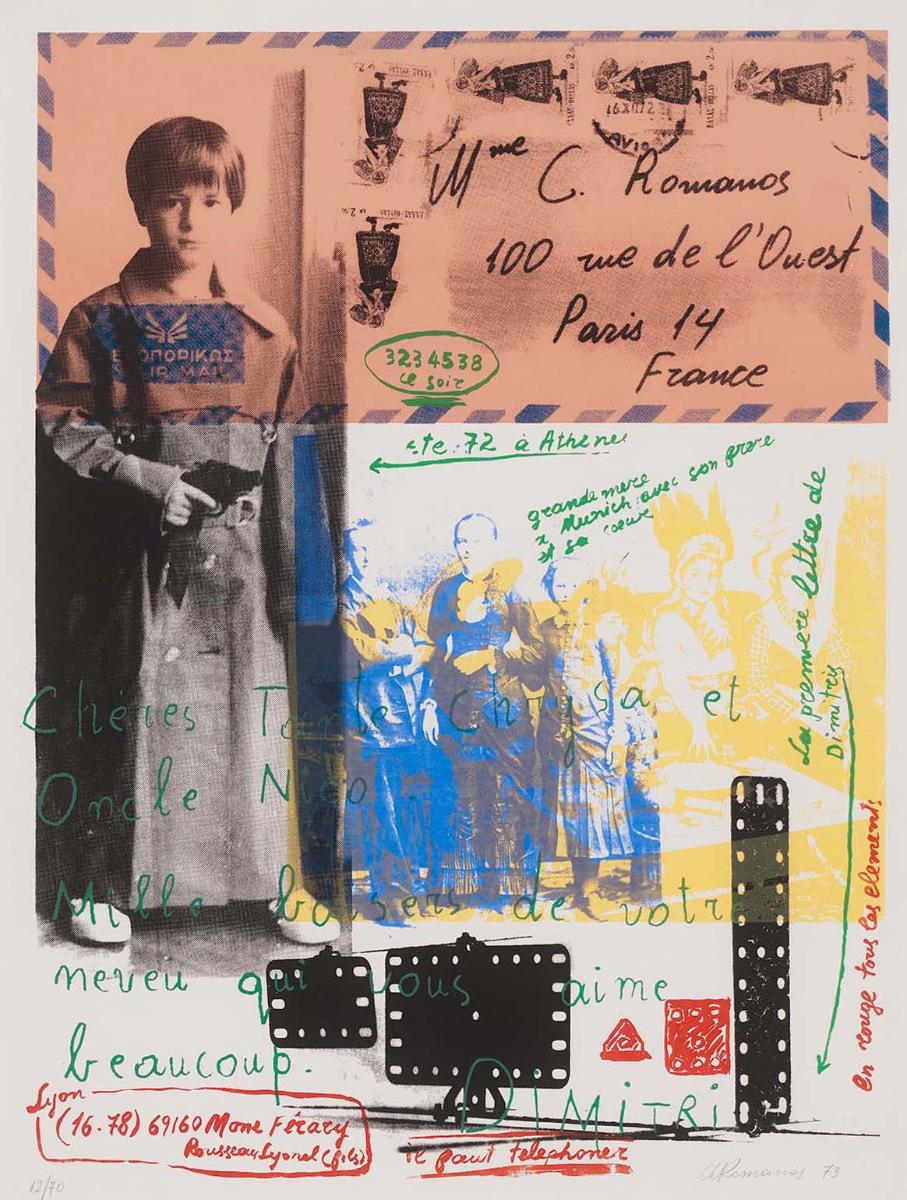
Χρύσα ΡωμανούΤα πρώτα χρόνια της δεκαετίας του 1970 η Χρύσα Ρωμανού δημιουργεί μια σειρά αριθμημένων μεταξοτυπιών για να συνθέσει ένα είδος οπτικού διηγήματος από αυτόνομες εικόνες που συγκεντρώνονται σε “folios”. Πρόκειται για καθαρά αυτοβιογραφικά έργα, τα οποία εμπερικλείουν σκηνές από την προσωπική και επαγγελματική της ζωή, συνδυάζοντας συχνά εικόνα και λόγο, δίνοντας με αυτόν τον τρόπο τη δυνατότητα στον θεατή να «εισβάλλει» στον καθημερινό της κόσμο. Οι συνθέσεις πολύπλοκες, χτίζονται σε αλλεπάλληλες επιφάνειες, διεισδύοντας το ένα στρώμα στο άλλο: εισάγει κείμενα και χειρόγραφες σημειώσεις, φωτογραφίες δικές της και προσφιλών της προσώπων, προσχέδια των γνωστών κατασκευών της Mecano. Τέσσερις από τις συνολικά έξι που συγκρότησαν την έκδοση «Μερικές σελίδες ημερολογίου, με ένα υστερόγραφο του Πιερ Ρεστανύ» ανήκουν στη Συλλογή του Μουσείου Σύγχρονης Τέχνης.
Chryssa Romanou was born in 1931 in Athens. She studied at the Athens School of Fine Arts in the early 1950s in the laboratories of G. Moralis and A. Georgiadis. Her early artworks were in the realm of abstraction, and it was evident from an early stage that she was attempting to create a personal visual language. In 1961, she moved to Paris, where she stayed until her permanent return to Greece in 1981. During her time in Paris, she came into contact with a multitude of artists and art movements, which significantly influenced the evolution of her artistic career. Her collaboration with Nikos Kessanlis, both artistically and in their personal life, was reflected in various ways in her artwork. Her artwork includes different series, such as the "Myths" (interventions with diluted blue ink on the floor, over a white background with black outlines), monotypes titled "Repetitions" (prints created using thick oil to convey a sense of movement through continuous use and the resulting differences and wear), followed by the "Labyrinths," "Aimings," "Luna Parks," "Casinos," "Maps" (where she utilized images from photographic reports in magazines and newspapers) and "Mecano" (three-dimensional constructions inspired by the children's game). Subsequently, she created numbered silk prints in Paris. Upon her return to Greece, having already delved into the decollage technique in Paris, she created artworks that resulted from the detachment and pasting of images onto parallel layers, initially on the back of a gelatin sheet and later on plexiglass, a material she extensively used in her work until her death in 2006.


